
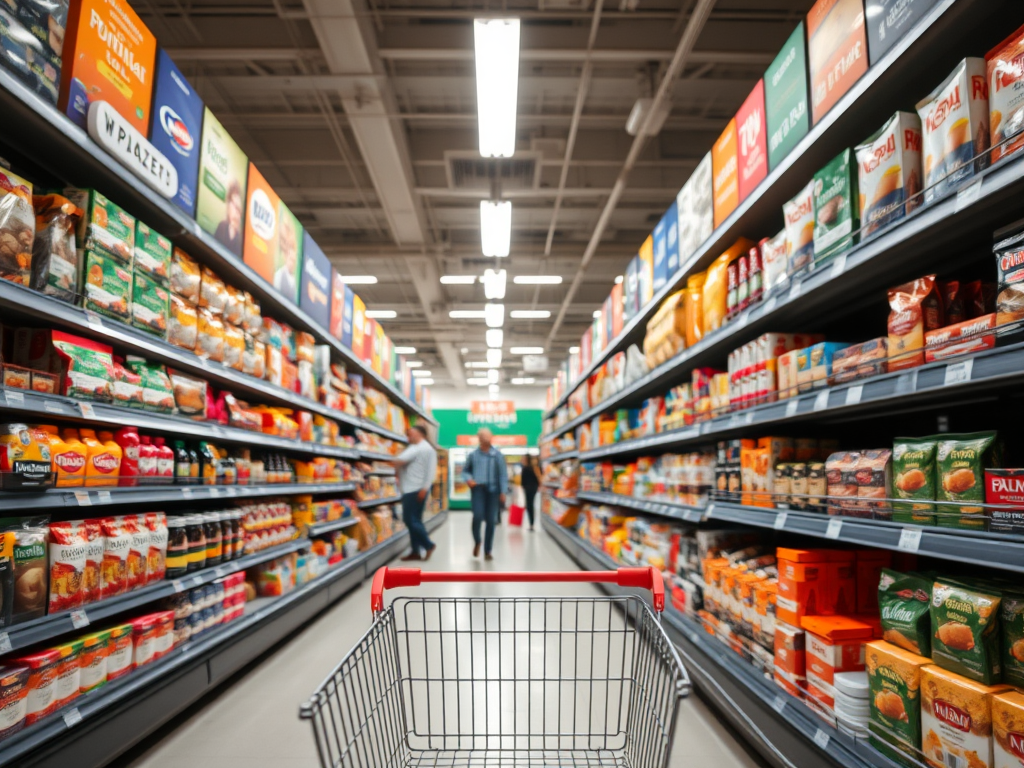
Let’s talk about food. Now we’re talking. Who doesn’t like food? I love food. I know my family does, too.
One thing that a lot of people say to me, one of those inevitable little tidbits of wondering about what having a big family with lots of kids is like, is this: man, I would hate to see your grocery bill.
Well, sometimes I hate to see them, too.
But not really. I manage to buy enough food for all of us for each week for less than $150. While my goal used to be $125, with inflation and more babies, that became less and less feasible, so I had to push it to $150 a week. Still a manageable goal for the time being.
This past week, I spent $146.07 on our groceries for the whole week for all seven of us. That was breakfasts, lunches (mostly for lunchboxes since my wife and I pack our lunches each day. And on the days my kids won’t eat in the cafeteria at school, they get a lunchbox as well), dinners, snacks, drinks, and desserts for most of the week. I say most because we do have a couple of weekly traditions that we budget for, which are donuts on Friday mornings, and dinner on Saturday nights. Donuts are usually about $15 and our weekly dinners range anywhere from as low as $30-$35 up to $60 depending on the week and where we decide to eat for dinner. So, my weekly food budget is, in total, about $200, give or take a few dollars here and there.
Of course, there are the off few weeks when we have book fairs or baseball games or dance recitals or school functions that necessitate another meal out, but we try our best to eat at home as much as we can to save as much money as we can. And we usually do pretty well with it.
I have heard from other people with families much smaller than mine that their grocery bill (just groceries) is over $300 a week. That’s mind-boggling to me. I have never once spent that much on groceries in one week, so the fact that some people do it weekly is astonishing.
It’s not always easy to stick to my goal for groceries. Sure, there are time when that name brand item or that T-bone steak look awfully good, but small sacrifices yield big returns when the end of the pay cycle comes around and we still need groceries. I am no expert shopper, but I do have a few tips for how to control the amount of money you spend on groceries (these aren’t just for big families either, though they are helpful for that).
Groceries
Tip #1: Order Groceries Online for Curbside Pickup
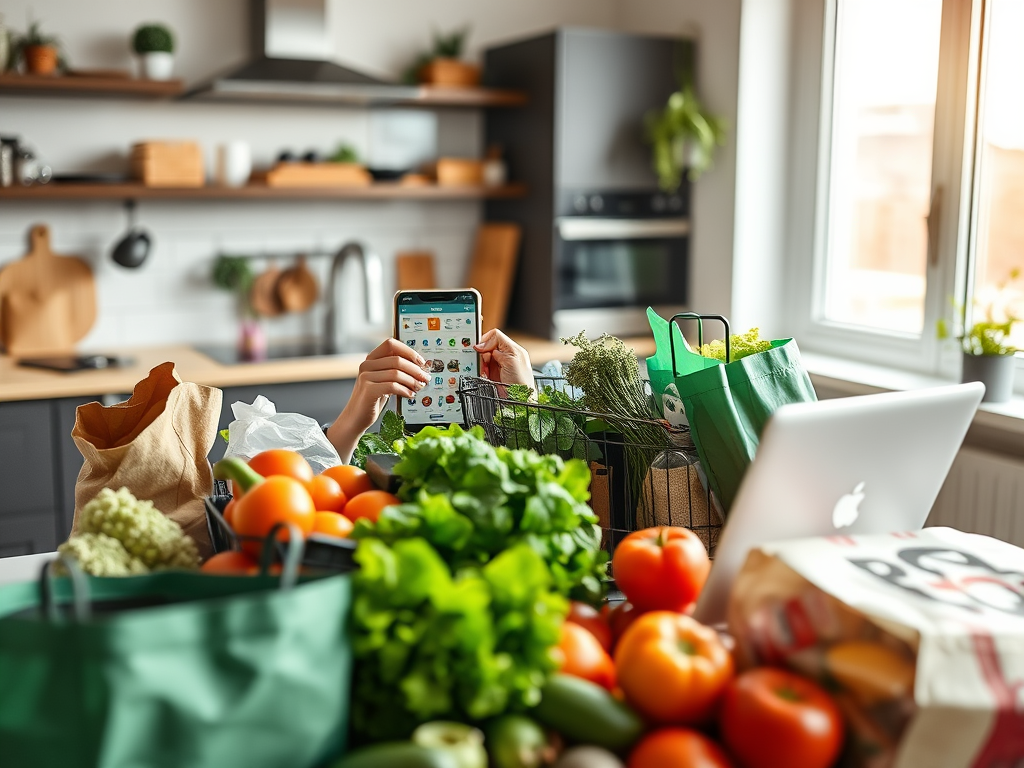
Most grocery stores offer free curbside pickup options nowadays. I have two in town that I use for our weekly orders, Walmart and H-E-B. Both have online apps that make ordering groceries a breeze.
There are two main reasons why I order online. The first is because I don’t have to be away from my family while buying groceries. Shopping in the store takes time, an hour at the least, usually more. I usually order groceries at bedtime as my kids wind down (that’s another topic for another day) and, while is usually takes me about an hour to get everything ordered, I don’t have to be away from my family. I’d much rather spend that hour at home with them than either going to the store by myself or taking all of them and losing my mind from all of the requests for items that they see. That $150 could easily become $300 with them in tow.
Which brings me to reason two: every time I shop in person, whether alone or with the kids, there is simply no way to keep control of the total you’re spending, despite your best efforts. You will lose track of the running total, unless you are actively adding it all on a calculator or writing them down, which turns a one hour shopping trip into a three hour nightmare. And that becomes all the more impossible when you have five kids asking for everything they see on the shelves. That’s no good. Shopping online keeps the total front and center so you can see exactly how much you’re going to spend. Knowing exactly how much you’re going to spend is key to budgeting. But that’s not all.
Tip #2: Create a Physical Weekly Menu
It may sound silly, but hear me out. When I grocery shop online, I create a menu of the meals I will make throughout the week (yes, I cook and pack all the lunches throughout the week. It’s one less thing my wife has to worry about. Plus, I enjoy cooking; she doesn’t. The kitchen is my domain, for better or worse. And I think she likes it that way) as a way of tracking all of the ingredients I will need and to make sure I don’t forget any meals. It’s easy enough to create a menu template and fill it in as I go. Here’s an example of what my menu looks like:
- Wednesday: Sploosh or Ramen Noodles
- Thursday: Chicken Alfredo
- Friday: Homemade Pizza
- Saturday Breakfast: Pancakes and Bacon
- Saturday Lunch: Sandwiches
- Saturday Dinner: Delicious, Cheap Food
I know the ingredients I need for each meal, and having the menu open and adding to it as I go helps keep me focused only on the food items we need, not the food items we want (which is another reason why I can’t grocery shop in person. I see too many things I want but don’t need). I don’t include breakfast or lunch on my menu most days because, well, I honestly don’t know why I don’t include those each day. It’s just a habit/routine for me now not to include them, so I don’t change it. But the beauty of it is that you can make it your own.
Another benefit is that the kids actually enjoy seeing what we’re eating and when we’re eating it. I hang the menu on the wall near our pantry, so it gives them something small to look forward to. For example, my daughter is a pasta fanatic. Her first look at the menu is to determine which day is pasta day (pasta is a staple because it is a relatively cheap meal that can feed a lot of people, be made in many ways, and made relatively healthy). She looks forward to seeing the menu when I print it to identify her favorite day of the week. It’s the little things, you know?
So make that menu to follow along with as you order groceries. I guarantee you it will save you time and money for not much of an initial time investment. Mine is a simple one I created in my Notes app that looks essentially the same as above. Canva has free templates you can use if you want a fancier one. Or you can create one that works for you in any app or program you want. It’s easy and effective.
Tip #3: Don’t Always Assume Name Brands Are More Expensive
Seems counterintuitive, I know, and while I admit that I am the king of generic brand items, there are actually some products where the name brand may be more cost effective to buy, or the item may actually just cost less.
Two examples spring to mind. One is couponed items. While the Walmart app does not have many coupons, it does have some items which qualify for Walmart Cash, which is basically a rebate they credit to your account that you can use on your next purchase. Sometimes, the name brand may be more expensive now, but the amount of Walmart Cash you get in return more than makes up the difference as it could make a huge difference on the next week’s order. I remember getting as much as $4 for Tyson brand nuggets when they were only $2 more than the Walmart brand, so I netted $2 in savings buying them.
The H-E-B app routinely has hundreds of dollars of built in coupons. It’s the reason I default to H-E-B. This past week, I saved $10.63 using their coupons. They routinely offer generic and name brand coupons, with some of the savings on the latter being better than the savings on generics. Whatever store you order from, look for deals on all of the items, not just name brand. You may be surprised to find that some of the name brands can actually be cheaper.
Then there is the most recent example I can think of for a name brand item just being cheaper than the generic. Hershey’s Semi Sweet Chocolate Chips are $2.89 for a 12 oz bag. The generic store brand 12 oz bag of Semi Sweet Chocolate Chips is currently listed at $3.09. I have no explanation for it. It simply costs $0.20 less to buy the name brand chocolate chips.
So, as I said above, don’t always assume the name brand is more expensive. It usually is, but not always. It is worth looking into, especially if you decide to shop online because it is very easy to filter your search to find the cheapest items first.
So, those are my tips for grocery shopping. Online is the way to go. Make that menu. Shop the cheapest item, not just generic. It’s simple.
Dining Out
As far as eating out, that’s completely subjective. It all depends on what your family can eat, is willing to eat, and can afford to eat. Thankfully, my children don’t have any real dietary restrictions, so that does make eating out options a little easier and a little cheaper.
Only a couple of tips here.
Tip #1: Family Meals
One of the best tips I can offer for dining out is looking for restaurants that offer family meals. These usually include a protein option, a side or two, some sort of bread, and, if you’re lucky, a drink to share. These are sometimes not the healthiest options, but they usually provide the most food for the money when trying to feed a large family.
Tip # 2: Coupons and Meal Deals
The best tip I have for saving money on dining out is coupons and meal deals. As old school as it sounds, in my area, we get a packet of coupons in the mail about once a month. There are various options in the packet, some of which can save us $20-$30 on dining out. It is worth the time it takes to look through to see which ones your family may use. If you have access you coupons, find them and use them. It is very much worth it.
One of our favorite not-so-healthy options is Wendy’s. They have the $5 JR Bacon Cheeseburger Biggie Bags that my kids love. A burger, four nuggets, fries, and a drink for $5 is virtually unbeatable nowadays, and it allows us a dining out option that we can all agree on for about $30 (the little two usually share a bag, and someone always has a nugget or two they don’t want that becomes communal property).
A somewhat healthier option is Subway, who always sends out coupons in my areas for three footlongs for $17.99. Toss in a pizza for those who don’t want a sub, a big bag of chips to share, and a two liter, and we’re talking all of us fed for about $30 again. Little Caesar’s is also hard to beat. McDonald’s Happy Meal’s are still reasonable and the $5 Meal Deal is a great option. Jason’s Deli has kids meal coupons. Bush’s Chicken has family meal coupons that are really good when they toss in a gallon of tea.
I know, I know, these aren’t all the healthiest options. But once a week for a meal out is not too much in my opinion. Life is too short to eat healthy food all the time. Sometimes you want a good deep fried chicken strip or cheesy slice of pizza. It works for us. It may not for everyone, obviously, but it’s one small way to relax a little each week and not have to cook at least one meal.
So that’s food for us in a nutshell. I will share recipes and specific meals we enjoy later on as separate posts (the menu items above are authentic to our menu, FYI), but I wanted to focus on the how we do it instead of too much of the what, if that makes sense. That will come later.
Until then…
Postscript
This last section reminded me of something that happened recently while we dined out together. My wife had some coupons for a free kid’s meal from Chili’s that I think came from our local library’s summer reading program (I could be wrong about that). So, we took the five and had a great meal.
As we ate, I noticed the waitress take our pay-at-the-table machine and didn’t really think anything of it. Those things always have problems, so I assumed she was going to swap it out for another one. When I requested our ticket, she informed me that someone had already paid for our bill.
I was blown away. Anyone who eats out with kids knows it is stressful as you always think your kid is being too loud for those around you. As parents, other people’s kids don’t really bother us because we’re too busy worrying about our own kids, but we do worry about those who don’t have kids because we don’t want to ruin their good time (being considerate of others is something we always try to emphasize to our kids, something else I’ll write about in the future).
So, to whoever it was that paid for our meal for us, I know the chances of you seeing this blog post are astronomically low, but I wanted to express to you and anyone else reading how much something like that means to my family. We know we get funny looks from people. We know people snicker at us and poke fun at us for “not knowing how this works.” We know that we stick out as a group and it does make us self-conscious to a certain degree. We do feel like outcasts sometimes.
Your simple gesture of covering our food brought so much joy and happiness to all of us that we simply cannot even begin to express how much it meant to know that someone saw us and appreciated us for who we are. Just knowing that someone would be willing to do that for us meant the world to us, as cliché as that may sound. We will not forget your kindness, whoever you are, and we will one day find the right opportunity to pay it forward in the same way in your honor.
Personal anecdote aside, I am not saying you, the reader, have to do this for someone else. But the power of simple acts of kindness is immeasurable, especially when it comes to food. This one simple action from someone who will always remain anonymous to us let us all know that we mattered. That matters a whole awful lot to people like me.
My kids asked me why someone did that for us, as it is something that we had never had happen before. We told them that it is simply because they wanted to do something nice for someone without expecting something in return. It was a powerful lesson for them grounded in something that actually happened to us. It’s a moment we won’t soon forget, and I hope my children never do either.
Alright, I know I went off topic here, but not really. It was still about food, right?

 Bring Back Big Families
Leave a reply to Twelve: Teacher by Day, Dad by Night: The True Story of How Early Dinners Keep Me Sane – Bring Back Big Families Cancel reply